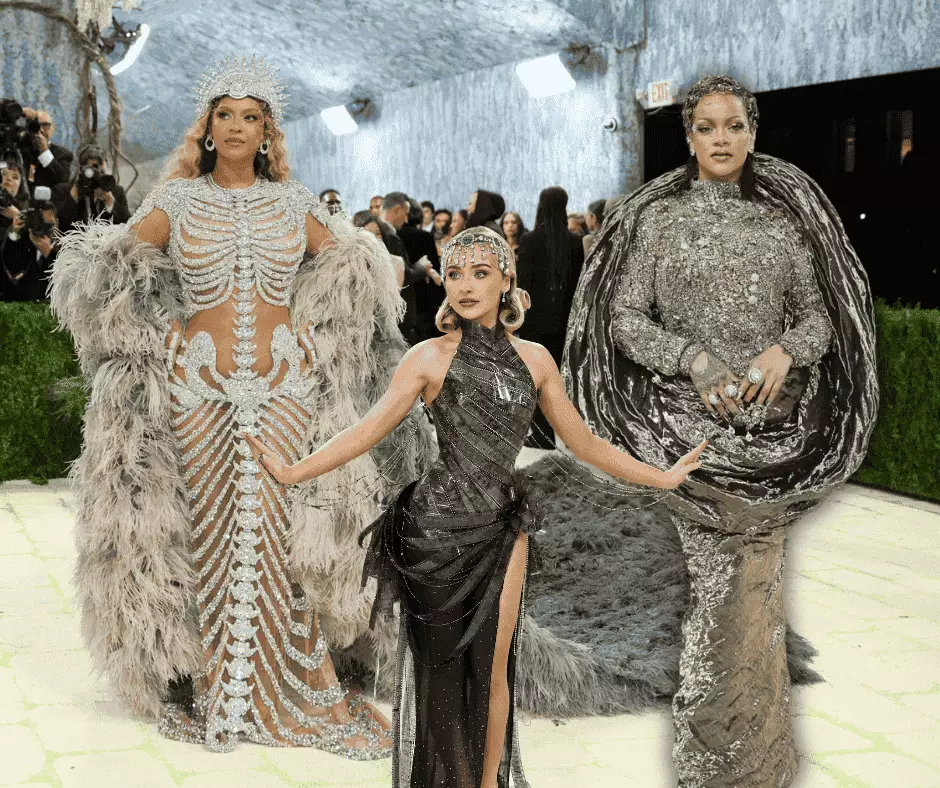
The theme, “Costume Art,” paired with the dress code “Fashion Is Art,” encouraged guests to approach clothing as an artistic medium connected to the body itself.
That shift may sound conceptual at first, but the impact was very real. The 2026 Met Gala became one of the clearest demonstrations that modern fashion no longer operates as a simple product industry. Fashion now behaves like a living network of visual storytelling, intellectual property, historical interpretation, digital distribution, audience participation, and commercial monetisation happening all at once.
The event became a case study in how creative industries are evolving in the modern digital economy.
Fashion as Artistic Language
Previous Met Gala themes often focused on designers, aesthetics, or historical periods. This year’s exhibition examined something deeper: the relationship between clothing, the body, and artistic representation across thousands of years of human history.Curator Andrew Bolton described the exhibition as an exploration of “the dressed body” and its presence throughout art history. The exhibition connected garments with paintings, sculptures, photography, and objects spanning roughly 5,000 years.
That framing changed the tone of the event entirely.
Celebrities and designers were no longer simply choosing glamorous outfits for the red carpet. Many approached their appearances like museum interpretations, performance pieces, historical references, or visual essays about identity and representation.
Several attendees directly referenced iconic artworks. Madonna drew inspiration from surrealist imagery connected to Leonora Carrington. Rachel Zegler referenced classical portraiture. Heidi Klum transformed herself into a marble sculpture illusion inspired by Raffaele Monti’s “Veiled Vestal.” Troye Sivan approached the theme through references to downtown New York art culture and artistic self-expression from the 1980s.
Fashion became a language for discussing memory, history, politics, gender, craftsmanship, and artistic legacy.
That evolution matters because it reflects how audiences now engage with creativity itself. People increasingly expect fashion to communicate meaning rather than simply display luxury.
Fashion as Media Ecosystem
One of the most fascinating aspects of the 2026 Met Gala was how quickly every appearance spread across digital platforms.Within minutes, looks were dissected through livestreams, reaction videos, TikTok explainers, editorial galleries, meme culture, AI-generated commentary, and fashion analysis threads. After-party looks received almost as much coverage as the main carpet itself.
A single appearance now generates value across multiple industries simultaneously.
Fashion houses gain visibility. Publishers generate advertising revenue. Social platforms benefit from engagement surges. Influencers monetise commentary. Stylists build personal brands. Beauty products gain attention. Photography agencies license imagery worldwide. AI systems train on visual references and aesthetic patterns.
This means fashion moments are increasingly behaving like distributed intellectual property systems.
The creative work expands outward rapidly, producing commercial outcomes far beyond the original event itself.
The Met Gala once relied heavily on magazine recaps and television coverage. Today, the event functions more like a real-time global media engine where culture, commerce, and technology move together.
Audience Participation
One reason the 2026 Met Gala generated such strong reactions is that the theme allowed broad interpretation.Some celebrities approached the event literally through references to famous artworks. Others explored sculpture-inspired silhouettes or historical tailoring. Some focused on body form and visual illusion, while others treated fashion as emotional storytelling or personal identity expression.
This flexibility created stronger public engagement because audiences were invited to interpret the looks themselves.
The red carpet became an interactive cultural conversation rather than a straightforward fashion showcase.
That mirrors a broader transformation happening across modern media. Audiences increasingly participate in meaning-making. They remix, reinterpret, analyse, critique, meme, and redistribute content continuously.
Creative work now lives inside ecosystems of participation.
Fashion houses and entertainment brands are adapting to this reality by creating experiences that invite interpretation rather than delivering fixed narratives.
The Met Gala’s 2026 theme captured that shift remarkably well.
The Influence of Tailoring and Identity
Although the 2026 theme focused on art and the body, traces of the 2025 exhibition “Superfine: Tailoring Black Style” remained highly visible.That earlier exhibition explored Black dandyism and the role of style in shaping Black identity across centuries of history. The exhibition examined tailoring as a form of resistance, dignity, self-definition, and social expression.
The influence carried forward into 2026 through continued attention toward craftsmanship, tailoring, body presentation, and fashion as cultural authorship.
This continuity reveals something important about the direction of modern fashion discourse.
The industry is increasingly moving away from viewing clothing as seasonal consumption alone. Fashion is being treated more seriously as historical language, political expression, and cultural documentation.
That evolution changes how fashion is archived, distributed, discussed, and monetised.
Technology and Distribution
Artificial intelligence and digital systems also played a significant role in how the 2026 Met Gala circulated online.AI tools generated summaries, commentary, image reinterpretations, trend predictions, and artwork comparisons almost immediately after celebrities appeared on the carpet.
Fashion discovery itself is becoming increasingly algorithmic.
Audiences now experience cultural events through recommendation systems, short-form clips, AI-assisted search results, and engagement-driven distribution patterns.
This creates new operational challenges for creative industries.
A single fashion appearance may involve photographers, designers, stylists, archive references, licensing agreements, publication rights, social distribution, sponsored partnerships, regional media deals, and derivative digital content spreading across dozens of platforms.
As creative ecosystems become more fragmented, organisations require stronger systems to maintain clarity around ownership, attribution, usage rights, and revenue distribution.
The future of creative industries will increasingly depend on an operational structure sitting underneath cultural visibility.
Why This Matters
It is easy to dismiss the Met Gala as a celebrity spectacle. Yet events like this often reveal where culture, media, and commerce are heading before those changes become fully visible elsewhere.The 2026 Met Gala showed several important shifts happening simultaneously.
Fashion is becoming increasingly tied to artistic interpretation. Creative works are spreading across fragmented digital ecosystems. Audiences now participate actively in cultural meaning-making. Technology is accelerating distribution and reinterpretation. Commercial value is becoming harder to track across expanding creative networks.
These changes affect far more than fashion.
Music, film, publishing, gaming, influencer economies, and digital entertainment are all facing similar challenges around attribution, ownership, licensing, and transparent revenue participation.
As creative ecosystems continue expanding, organisations will require systems capable of supporting increasingly layered and interconnected workflows.
Creative Splits and Modern Creative Infrastructure
Creative Splits helps organisations manage complex revenue and royalty environments with structured systems designed for modern creative industries.As creative works move across platforms, partnerships, regions, and digital ecosystems, accurate distribution logic becomes increasingly important. Creative Splits supports organisations through transparent workflows, configurable revenue structures, multi-currency capabilities, and centralised reporting that help maintain clarity across growing operational complexity.
Creative industries are entering a period where culture and infrastructure are becoming deeply connected. Strong systems help organisations adapt with greater visibility, trust, and confidence as creative economies continue evolving. Contact us now to learn more!